|
Oct 28th
Brazilians love noise. Some of these small towns boast central noise facilities: loudspeakers at every corner, transmitting the same "interesting" local news the whole day: "The bus from Altamira will arrive sometime this afternoon... Attention, please. The grocery store offers bananas for 20 centavos per kilo... The parrot of Dona Maria died tonight, and the dog of Sinhá Vitória crossed the main road this morning..." Then, it's the favorite music of the town's DJ, before it all starts again. Shops ignored by the town's news channel install their own loudspeakers and place a salesman with a microphone on the sidewalk (if they have one), who announces his special offers to every passerby. Optionally, in towns big enough to have a central square, there are cars with loudspeakers on top, circulating around the square from sunrise to sunset. The good thing for the hungry and thirsty cyclist is that you can hear that you are approaching a settled place kilometers before.
Meanwhile, they all know me, and some of them seem to be embarrassed if they stop to chat with me and I can't remember that they already passed me this or that day some hundred kilometers away. "What? You haven't seen me in my truck?? Why not? I still remember you!!!" Usually, I am referred to as "o louco" or "o doido".
I make a good distance that day, but soon, it's time to look out for a place to sleep. As so often, I pull into a small farm. This one is especially funny. It's run by three families; they all gather around the fireplace, and we sit there until late at night.
When I finally stumble back into my tent, I find a big spider on top of my pillow.
Oct. 29th
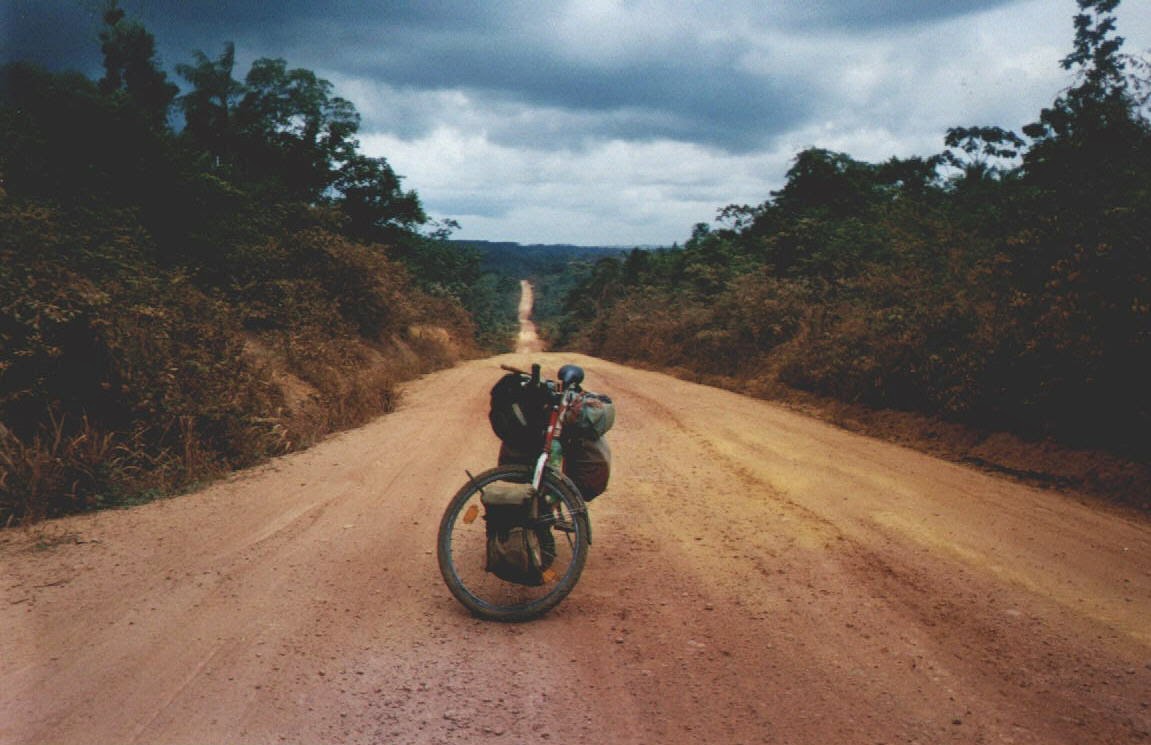
The next morning starts sunny. I have been lucky so far; I have had very little rain - either at night or just short showers that soon dry out. The sun burns down, and despite using factor-50 sun protection, I burn my right hand.
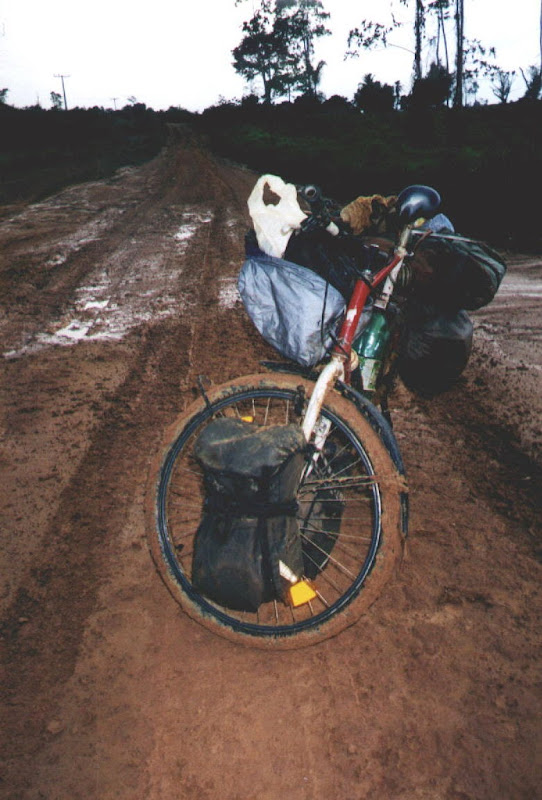
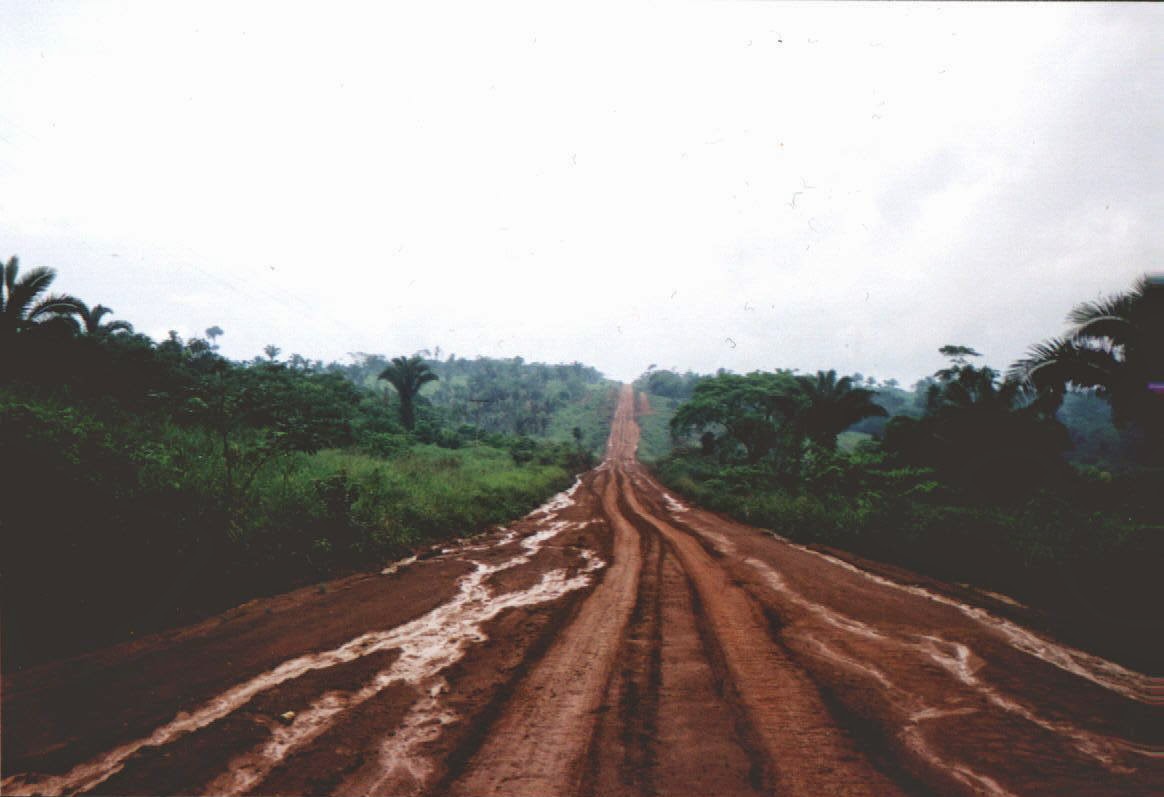
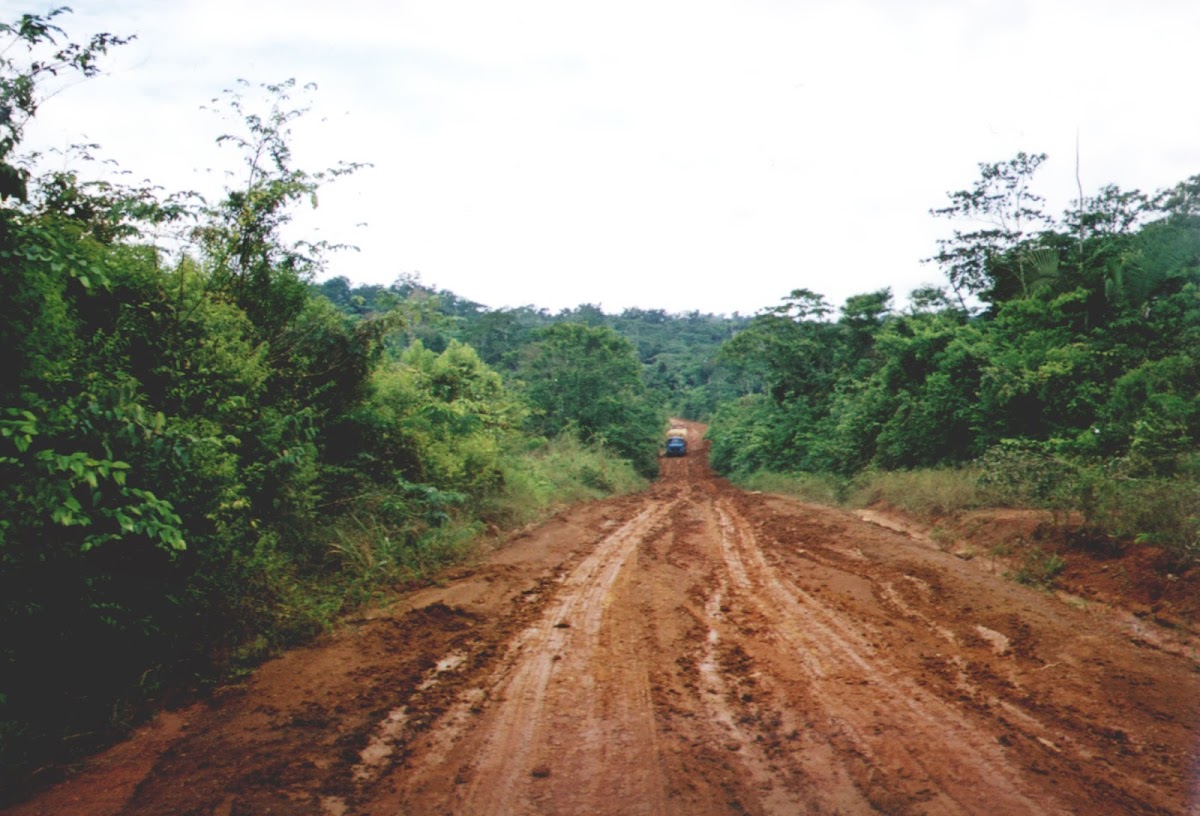
Road conditions are poor in this stretch. It takes all my concentration to maneuver the bike, so I don't notice the black clouds forming up there. I only notice when the first raindrops come down; five seconds later, I'm completely soaked, and another five seconds later, the dusty road is transformed into pure mud.
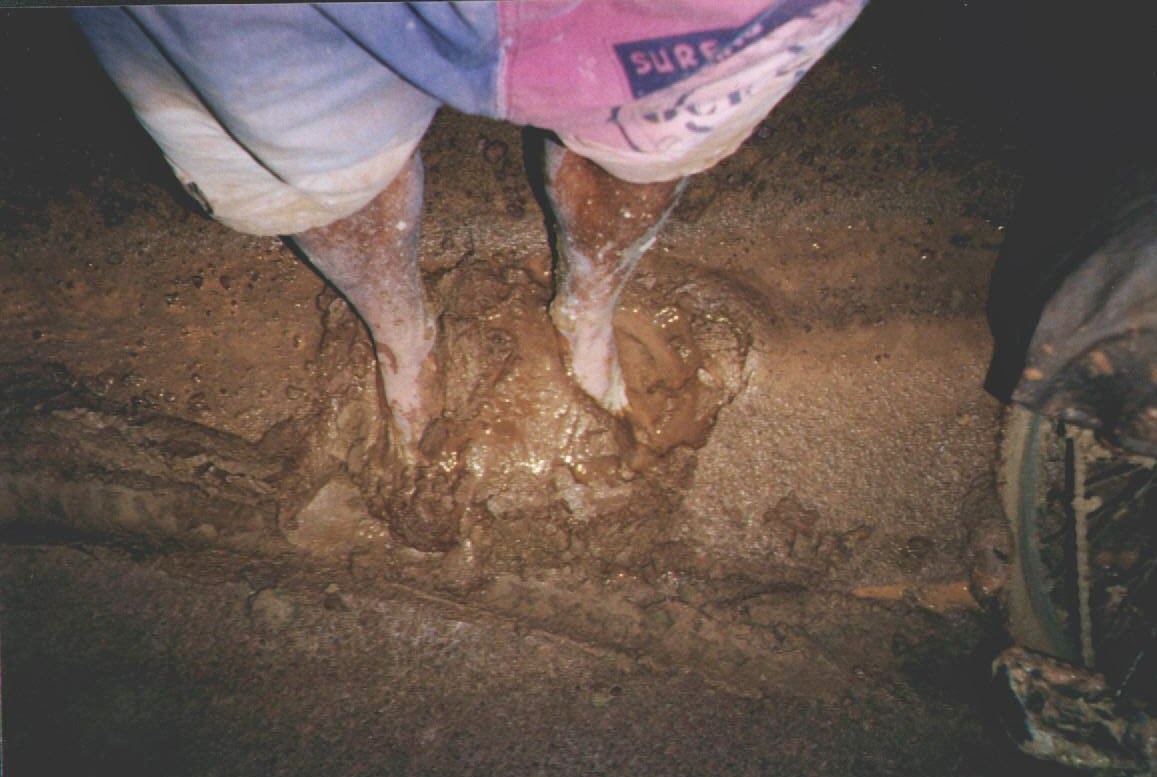
In the late afternoon, after the rain stops, I try to continue, but it's almost impossible. I have to stop every 50 or 100 meters to remove tons of mud, then I can continue for 10 seconds before the wheels block again. The only reason why I continue is to reach a bar which is said to be three or four kilometers ahead.
It takes me one and a half hours to reach it. Finally, at least some cold beer to flush down the dirt and frustration. I meet a gaúcho (a Brazilian originally from the southern part of Brazil) who invites me to stay at his farm tonight - another two kilometers or 30 minutes ahead. His family is of German origin, and so my efforts to get there are honored with cold beer, real homemade German bread, sausage, and sauerkraut!!
Oct 30th
I sleep that night under cacao trees which I find some hundred meters off the road, in the middle of the jungle at the end of a narrow, overgrown trail.
Oct 31st
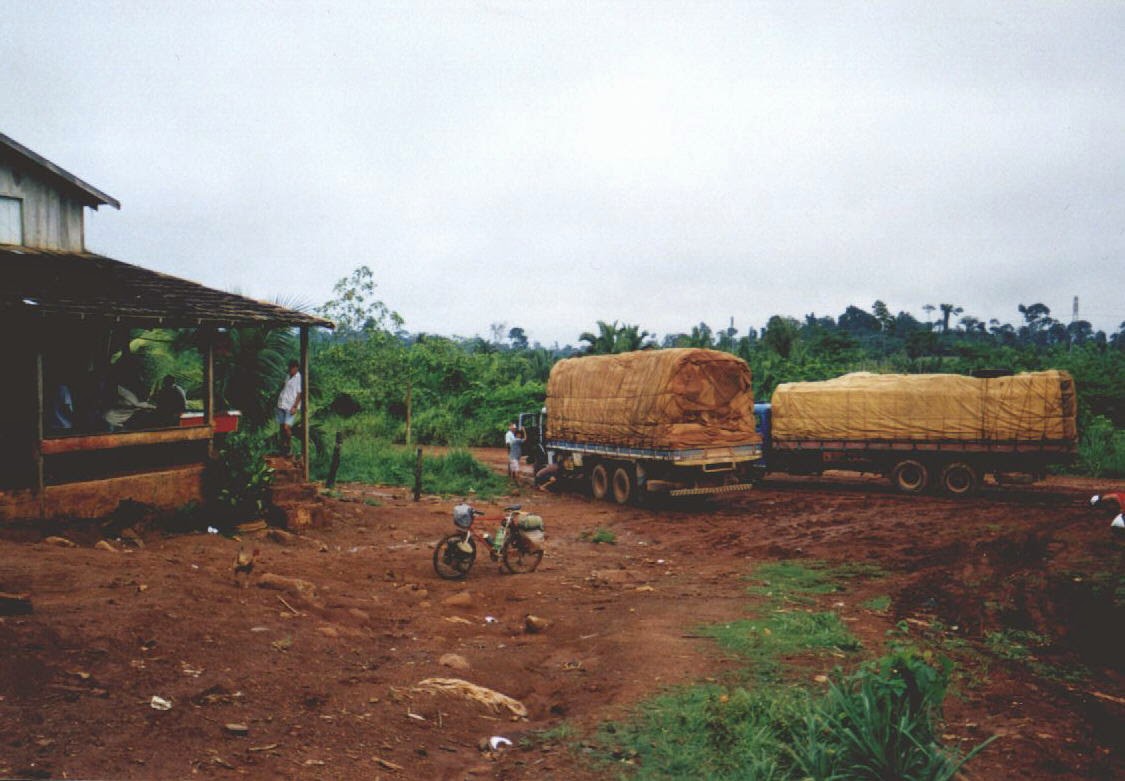
Another rainy day; by 2 p.m., I have made only 5 kilometers. I pass most of the day in a small bar, filled with the passengers and drivers of two trucks and a pickup, who are stuck there as well.
One of the truckers worked here when the road was constructed, and he can explain why the road always climbs as steep as possible to the top of the highest hill available: if they had built it parallel to the hills, the next rain would have washed it away, and down in the valley, it would be flooded frequently. The "best" way is to build it straight uphill, so that the water doesn't need to cross it. I don't know if this is true, but at least it sounds reasonable. Bad luck for the cyclist.
Once again, I spend the night in the garden of a very friendly family. The father is about my age but already has six kids. We talk a lot, and somehow the subject comes to the new educational program for adults recently launched by the Brazilian government. He feels very ashamed when his wife tells me that he takes part in that program. He was born as one of ten kids in a poor family and never had the chance to go to school. Only now is he starting to learn what he missed in his childhood.
At night, I can hear his wife giving him lessons in reading and writing. Then, it starts raining again.
Nov 2nd
Yeah, blue sky!!! Finally, the rain has stopped. There is still a lot of mud on the road, but the sun is starting to dry out the surface, and I am soon able to find my way through. At noon, I stop at a nice, clear river and dedicate a good amount of time to bike cleaning and maintenance.
Finally, I can enjoy the landscape again. There is not much fun in jumping into rivers during a rain shower, but now I really enjoy them. I wonder why some of them are really cold. For millions of years, water has come down at 30 degrees, the air is 30 to 35 degrees warm, and everything else is too, so where does the water cool down? Can someone explain that?
I have 30 kilometers to go, it's early in the afternoon, and the road is becoming better hour by hour, so I see no reason to hurry - until I see the black clouds coming in from the south. I jump back on my bike and cycle as fast as possible. The clouds chase me for two hours, and then I stand on top of the last hill, with a fantastic view down into the Tapajós valley.
The ferry takes half an hour to cross the river. It's the first time I have to pay; they charge 50 centavos (25 US cents) for my bike, and it takes about 10 minutes to find the receipt block for bicycles.
On the other side, I disembark right in the center of Itaituba. A real town, even with paved streets. The first thing I do is to cycle three times around the block, enjoying the asphalt under my wheels - and everyone probably thought I had gone completely mad!
I arrive on a public holiday - the "Dia dos Mortos" - and the town looks really dead. But at night, people come out and there is a big party on the river beach. However, I manage to find my way back to my hotel before sunrise.
The next part is 400 km along the Rio Tapajós. I have found a jeep driver who "frequently" drives to Jacareacanga, which is the one and only town along the way, but at least I have finally found out that the road actually exists!
Até logo
Micha
|