|
After a cloudy and rainy day in Tucuruí, I continue my tour in bright sunshine.
As I open the window in the early morning, I look out into bright sunshine. After two rainy days, there are no more clouds to be seen - an absolutely blue sky. I pack my things and hurry out of the hotel.
It's rush hour in the jungle town; every few minutes, a bus departs for the construction site at the river dam. I feel a bit out of place; I'm the only one on the overcrowded bus who isn't wearing blue working clothes and a helmet. My presence serves as welcome entertainment in their daily routine. From the last bus stop, it's still a long walk and a short truck ride; all together, it takes me an hour and a half to get back to the small bar where I left my bike the other day.
"Oh, what a pity you are back. I just wanted to sell your bicycle," jokes the nice owner of the bar when I interrupt his morning cleanup.
I ask if he had already found someone to sell it to, but instead of an answer, he gives me a huge cup of cachaça (the Brazilian type of rum), which makes for a difficult start at half-past seven in the morning.
I "pay" for the drink by leaving two or three kilos of food - noodles, rice, and soups - as I have already realized that I am carrying way too much. Instead, I stock up my water supply from five to seven liters, which is enough for half a day or so.
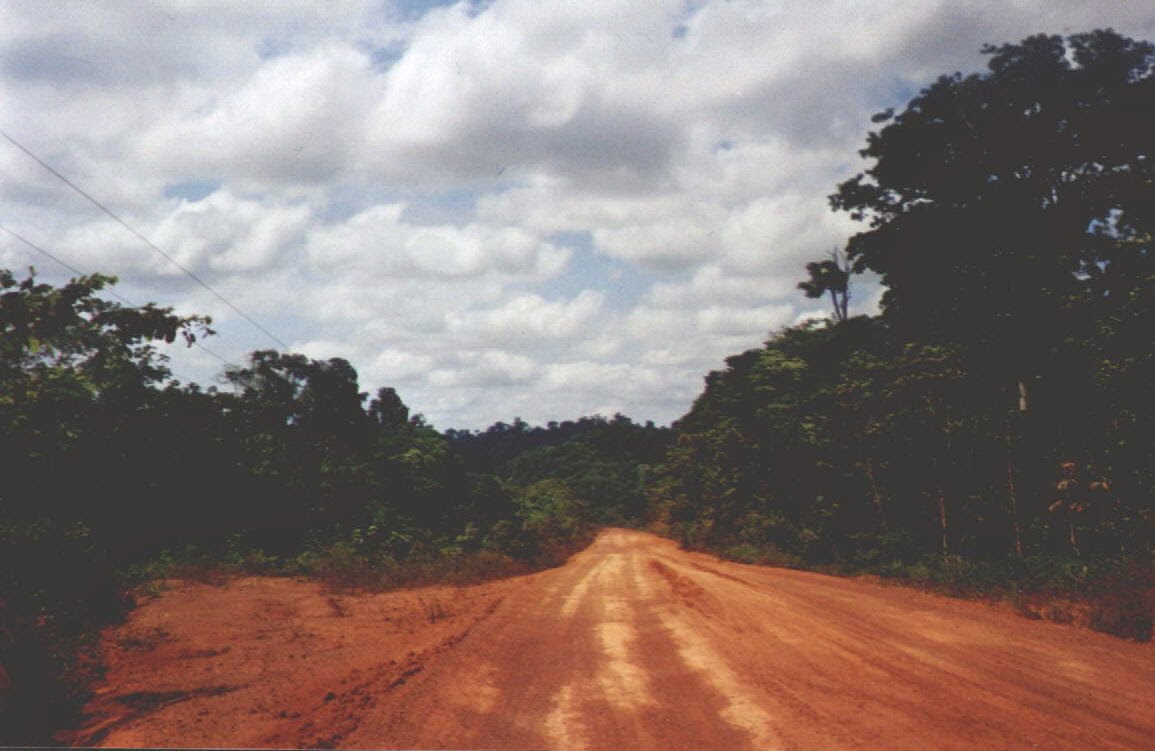
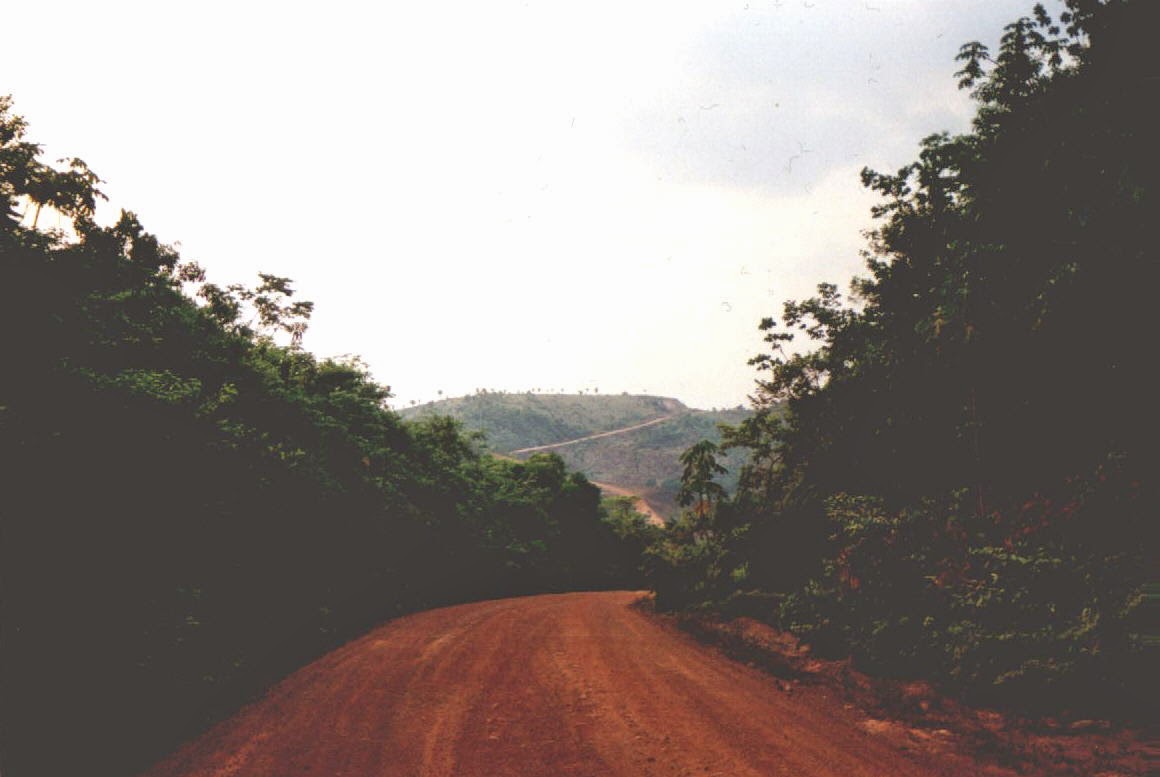
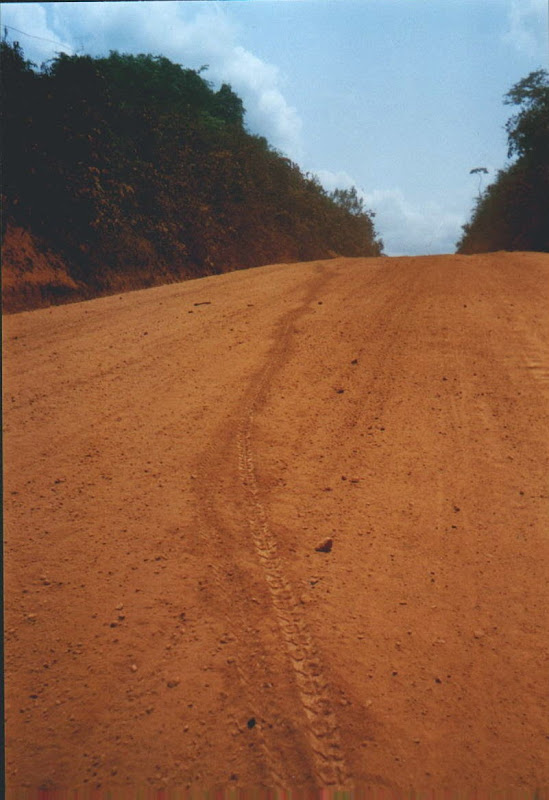
The road becomes more and more hilly - a constant up and down, mostly through uninhabited, primary rainforest. Few vehicles use this "shortcut", as it is much faster for trucks to take another road down to Marabá, which is 100 km longer but paved. That's why, along the entire stretch, no more than three vehicles pass by. And that is good for me, because the cloud of dust emerging from a truck thundering by is enormous.
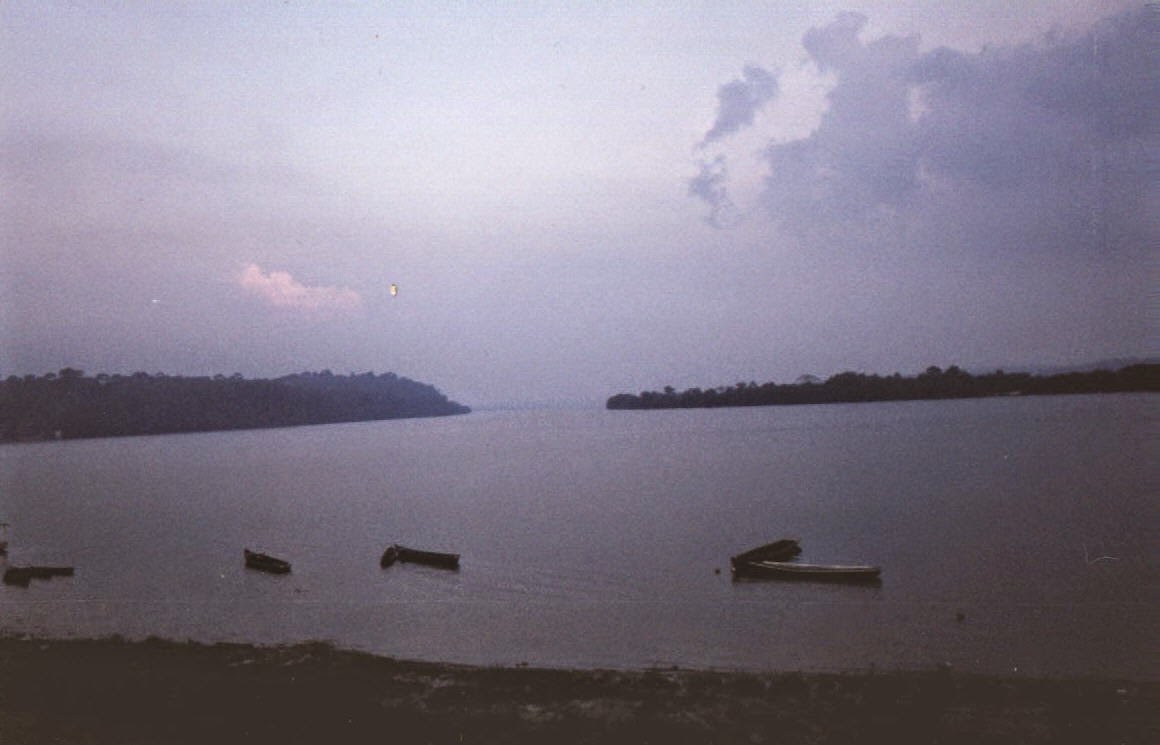
Occasionally, smaller clearings appear, sometimes allowing a very nice view of the lake on the left; the rest is dominated by the green of the forest.
The sun burns down, but I suffer less than the days before. Either it's better without the black asphalt, or I have already gotten used to the heat.
The hills make it difficult to proceed. On the uphill parts, I often have to walk, and on the downhill parts, I need to pull the brakes as hard as I can. I am not yet used to the dirt road and fear my bike will break apart at any minute.
In the afternoon, I reach Novo Repartimento and finally join the BR230, the official Transamazônica.
There is not much sightseeing to do; the town seems to exist only to supply the trucks on the Transamazônica. It consists mainly of gas stations, borracharias (tire repair shops), and basic restaurants. I have lunch in one of them - the usual: meat, rice, black beans, and manioc flour, plus two beers to celebrate the first 70 km on dirt.
In all of South America, you won't find any bar or restaurant, not even in the most remote area, without a TV - and if there is electricity, it will be running at maximum volume. While I eat, a soccer game is being broadcast, and the restaurant is pretty crowded. The advantage for me is that I can eat in peace and do not have to answer a lot of curious questions, because everyone is glued to the screen.
Only after the end of the game am I pulled into the discussions. "Which is your favorite club?" and "Who will win this year's championship?" they want to know from me. Puuuuuh, perhaps I should have informed myself before departure; I do not know anything about the current scores, either in Brazil or in any other country. What a shame.
I now turn westward, and from here on, there is much more traffic than before. About every five to ten minutes, a truck passes by, and each time, I am engulfed in clouds of dust.
I spend my first night along the Transamazônica hiding in the woods.
The guy who planned this road was probably no cyclist. (Besides that, the trucks have a hard time, too, climbing and descending all these hills.) The road winds a lot, and it seems as if it turns right or left in each valley just to pick out the highest hill available. I don't know why they made it like this; the landscape is not flat, but I see no reason to climb that much.
I go like this: Walk uphill, take a short rest, mount the bike, cycle a couple of meters on the flat hilltop, then pull the brakes as hard as I can on the downhill, because otherwise I won't come to a full stop down in the next valley. And I have to stop, because down there I usually have to cross some old wooden bridge, which is better to walk. No way to build up momentum for the next uphill.
I stop at each bit of shade available to cool down and drink some of my hot water... Every 30 or 50 km, I pass a bar, restaurant, or even a small town where I can get food and, even more importantly, cold drinks. I drink an average of about 15 liters a day: 10 liters of water, and the rest is Coke, Fanta, Sprite, Guaraná, and a lot of ice-cold beer :-)
I then don't even dare to fill my water bottles, with that scene from "Crocodile Dundee" in mind.
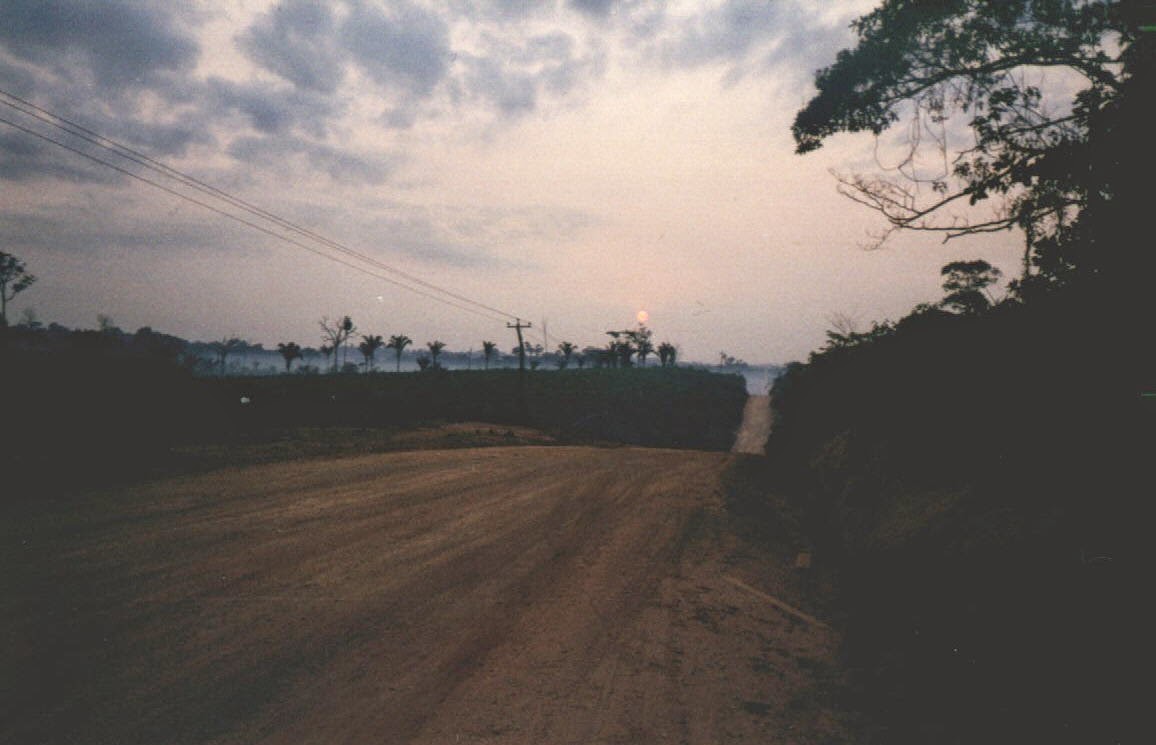
Night falls fast in the tropics. Within five minutes, it's completely dark, so you have to keep an eye on your watch in the late afternoon. Instead of sleeping somewhere in the forest, I now often pull into one of these small farms to ask permission to camp on their ground, and I am never sent away. I am ALWAYS invited to come in, to have dinner with them, and often I am even offered a place to sleep indoors. I prefer to sleep outside in my tent instead of pushing the kids out of their beds, but I gladly accept the dinner, which is simple but still better than the rice with tomato soup I have with me to prepare on my stove. (I "pay" for the food by distributing cookies and chocolate to the kids.) The houses usually have no electricity. A small candle is the only light, and water is picked up at the nearest river.
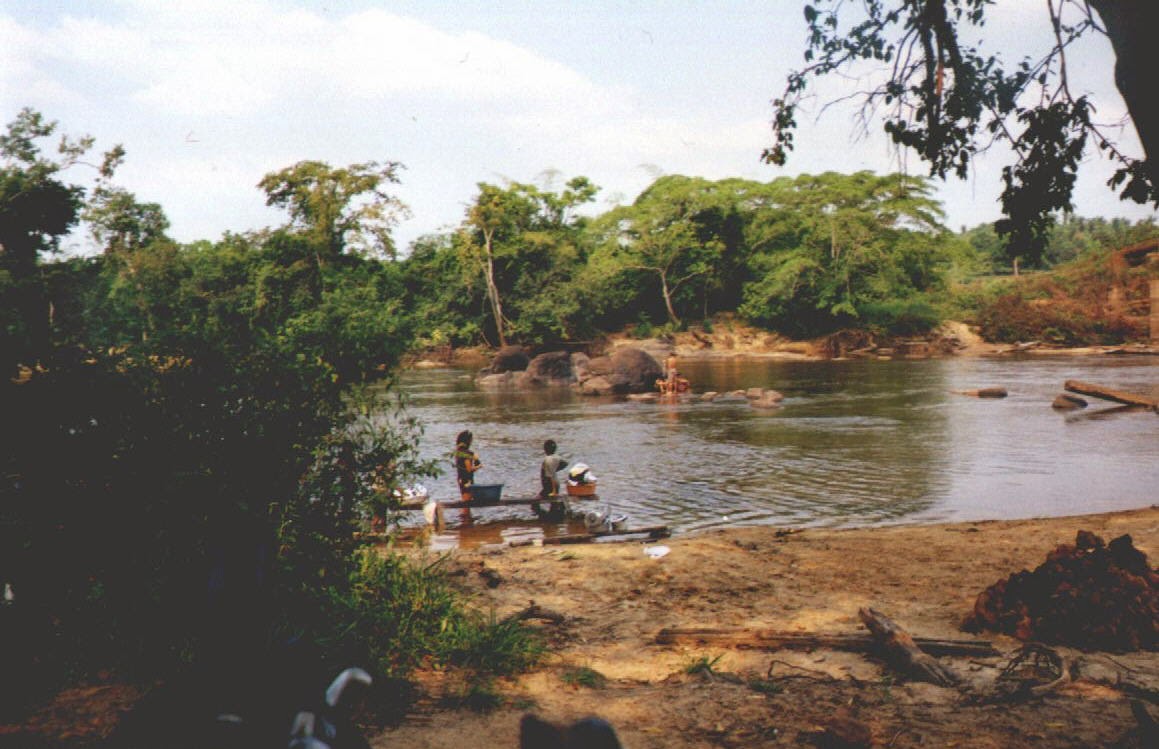
Well, finally I reach the Xingu River, and some hours later Altamira - the only town that deserves this name since I left Tucuruí.
Well, this is Rio Tocantins to Rio Xingu. The next part is Rio Xingu to Rio Tapajós - 500 kilometers - where I will reach the next town of notable size, Itaituba.
Até logo
Micha
|